
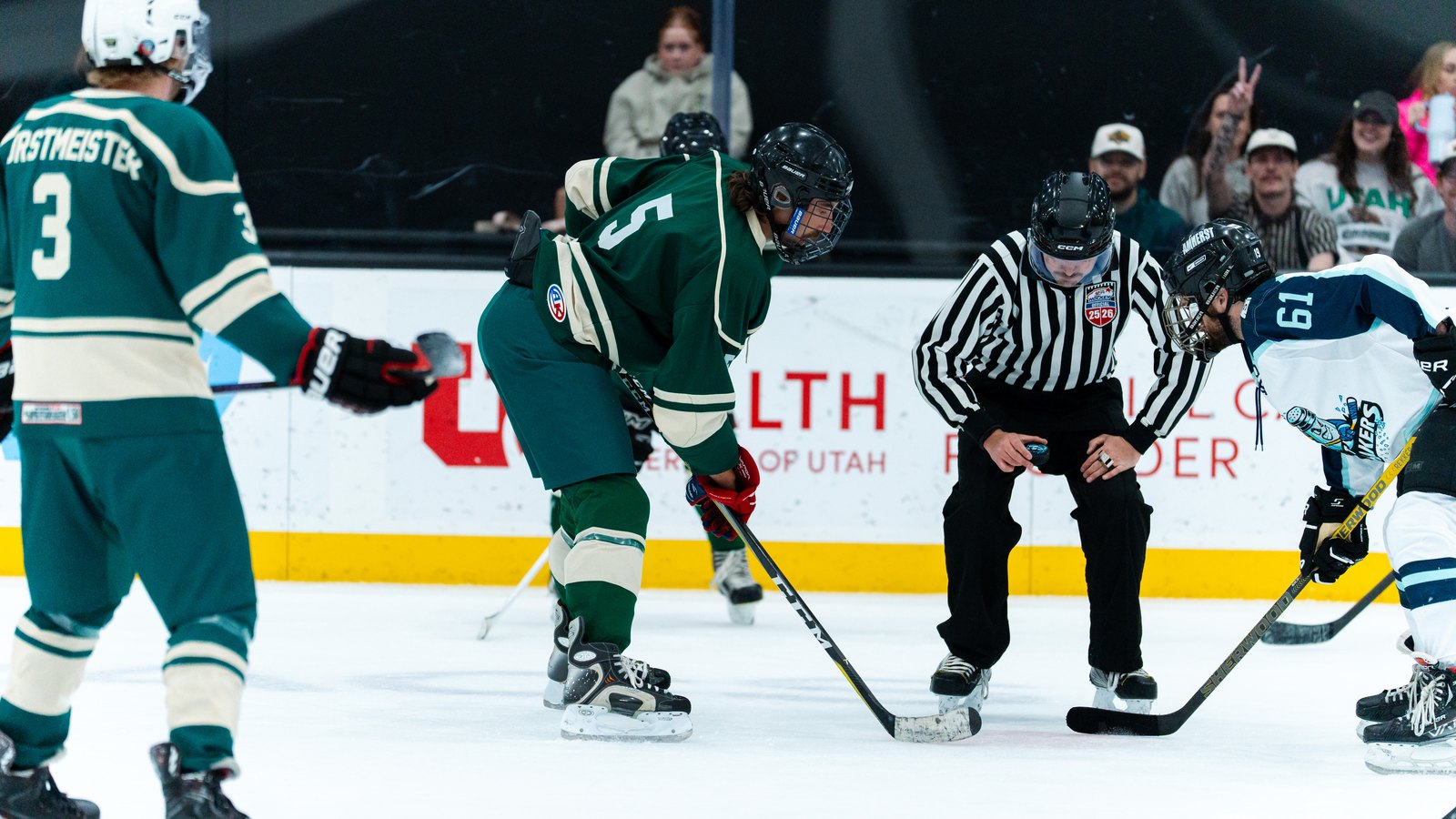
You go to sign up for a beer league and hit a wall of letters: A, B, C, D, sometimes E. Nobody tells you what they mean, and the league's own descriptions read like they were written for people who already know. Here's what the letters actually mean, why they're not consistent between rinks, and how to guess your level without embarrassing yourself in either direction.
Skill divisions exist for one reason: nobody has fun in a game that's wildly mismatched. A rink that dumps former college players and total beginners onto the same ice ends up with blowout scores, frustrated new players, and bored ringers. Letter divisions are the sorting mechanism that keeps games close and keeps people coming back.
A-level beer league is the top of the rec pyramid. Players here are often former pro, semi-pro, or high-level collegiate skaters — people who could probably still play juniors if their knees agreed. If you haven't played organized hockey before, A division is not your on-ramp.
B-level players usually suited up in high school or college and never really stopped. They know the game inside and out — reading plays, executing systems, handling the puck under pressure — even if their conditioning isn't what it used to be.
C is the broad middle of adult hockey. If you've been playing casually for years, you're probably here. C-level players have the fundamentals down — multiple shooting styles, skating backward, stopping from a sprint — without the polish of a former competitive player.
D is the entry point, built specifically for people with little or no hockey background. Expect a slower pace, patient teammates, and an emphasis on learning rather than winning. If you're coming straight from the stands after watching the Mammoth, this is where you start — we walk through the exact path in how to start playing hockey as an adult in Utah.
Here's the part that trips people up: there's no universal rulebook for what "B" or "C" means. A "C" player in one city's beer league could easily be a "B" in another market with a smaller talent pool. Utah's still a young hockey market, so divisions here can skew differently than in places like Minnesota or Ontario where the talent base runs deeper.
Once you've got a level in mind, our beer league equipment checklist for beginners and step-by-step guide to joining a beer league in Utah cover everything else you need before your first game.
Worried about picking the "right" level? The Utah Glizzies exist for exactly the players stuck between beginner and B-team ringer. Come find your line.
Meet the Team Go to The PitA, B, C, and D are useful shorthand, but they're a local guess, not a certification. Read the actual division descriptions, be honest about your background, and default to the lower level when unsure. Get the level right and you'll spend your first season having fun instead of either getting run over or bored out of your mind.